
Why 73% of Hotel Guests Prefer Self-Service
I've had the same conversation with hotel owners at least a dozen times this year. It usually starts with something like: "We pride ourselves on personal service" or "Our guests come here for the human touch."
And then I show them the numbers.
73% of travelers say they prefer hotels that offer technology to minimize contact with staff. Not "would tolerate." Prefer. That's from an Oracle study of over 5,000 consumers across multiple countries.
This isn't a pandemic hangover. The 2024 Mews survey found that 80% of travelers would happily stay at a hotel with a fully automated front desk. Among Gen Z? That jumps to 82%.
Something has fundamentally shifted. And if you're still betting your guest experience on the assumption that people want more human interaction, you might be solving a problem that doesn't exist anymore.
What the Data Actually Shows
Let me lay out the numbers, because they're striking.
The Oracle Hospitality study from 2022 surveyed 5,266 consumers globally. Some highlights:
- 73% are more likely to stay at hotels with self-service tech that minimizes staff contact - 53.6% want contactless check-in/out as a permanent feature - 49% want contactless payments - 38% want a fully self-service model where staff is available only on request
That last one surprised me. More than a third of guests actively want staff to stay out of the way unless called upon.
The Mews survey from 2024 painted a similar picture. They polled 2,000 people (half travelers, half hotel workers) and found:
- 80% willing to stay at hotels with fully automated front desks - Over 40% prefer checking in via website, app, or kiosk - 43% want in-room smart home devices - 34% want keyless room entry
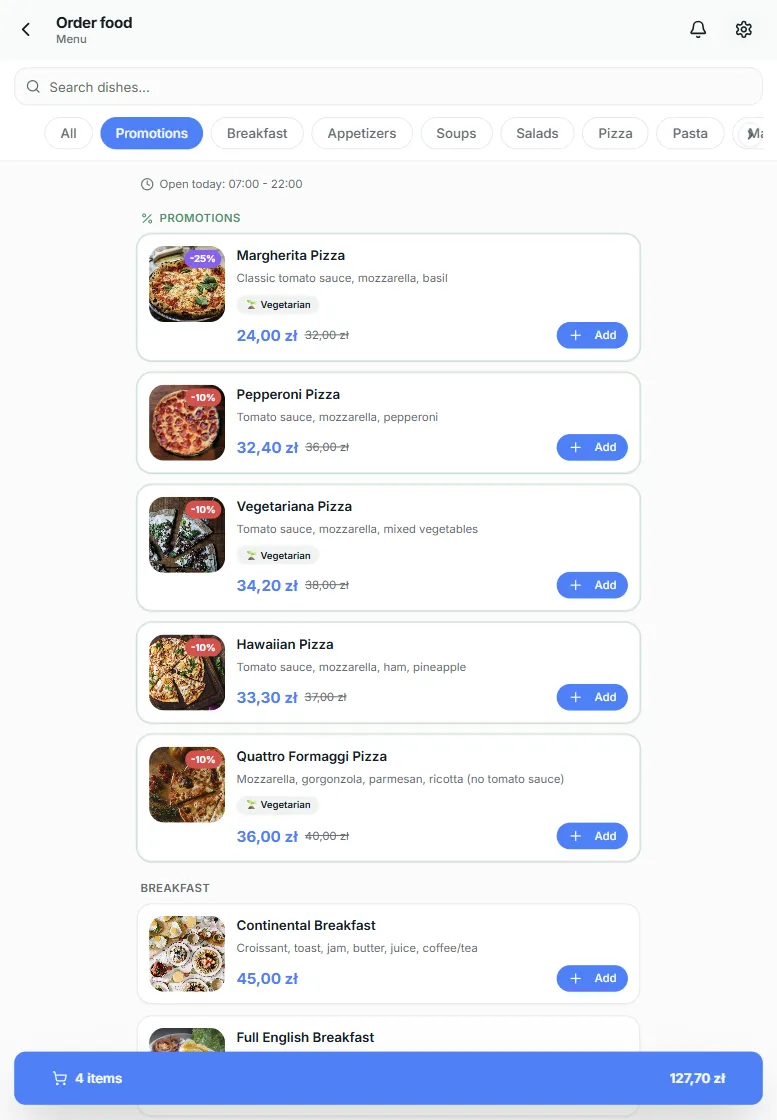
And it's not just check-in. When Criton surveyed travelers in 2020 (5,405 respondents pre-pandemic, 2,549 during), they found that 47% would order room service more often if they could do it through their phone instead of calling.
The pattern is consistent across every study I've seen: guests want control over their own experience.
Why This Is Happening (It's Not What You Think)
The easy explanation is "people are antisocial now" or "technology has ruined human connection." I don't think that's it.
Here's what I think is actually going on:
Friction is the enemy. Every interaction with staff, no matter how friendly, is a potential friction point. Will they understand my accent? Will there be a line? Will I have to make small talk when I'm exhausted? Self-service removes all of that. Scan, tap, done.
Control matters more than warmth. When I check in through an app, I know exactly what's happening. No surprises, no miscommunication. The 2025 Mews survey found that 93% of travelers are willing to share personal data if it means a more customized experience. They want the hotel to know their preferences without having to explain them every time.
Time is the new luxury. A traditional front desk interaction takes 3-5 minutes minimum. A kiosk check-in? Under a minute. Mews data shows kiosk check-ins reduce processing time by about a third. For a business traveler or someone arriving at midnight, that matters.
Introverts exist. We don't talk about this enough in hospitality. Not everyone wants to chat. Some people find it draining. Self-service options give those guests a way to have a great stay without social exhaustion.
The Revenue Angle Nobody Talks About
Here's something most hotel owners don't know: self-service check-in can create a better moment to present optional upgrades than a busy front desk queue.
Mews has reported stronger upsell behaviour in its own kiosk data. Treat that as a directional signal, then measure your own upgrade acceptance rate by channel.
Why? A few reasons:
No awkwardness. Upgrading through a screen is easier than asking a person. No judgment, no sales pressure, just options and a button.
Better presentation. A kiosk can show photos of the suite, the spa package, the late checkout. A receptionist can only describe it.
Time to browse. At a front desk, there's pressure to move quickly. With self-service, guests can actually consider the options.
The Criton survey backs this up differently - they found 47% of guests would order room service more often if they could do it digitally. That's potential revenue sitting on the table because the ordering process is too annoying.
This isn't about cutting staff costs. It's about unlocking revenue that friction was blocking.
What Smart Hotels Are Doing
I've watched this play out across dozens of properties. Here's what works:
Offering choice, not forcing change. The best implementations give guests options. Want to check in at the desk? Great. Prefer the kiosk? Here it is. Want to do it from your phone before you arrive? Even better. The Oracle study found that 96% of hoteliers are investing in contactless tech - they're not removing the front desk, they're adding alternatives.
Mobile-first over app-first. Nobody wants to download your hotel's app. Criton found that 80% would download an app for check-in, but "would" and "will" are different things. Browser-based solutions (QR codes that open a mobile page) work better because there's zero friction.
Rethinking the front desk role. When 40% of check-ins happen digitally, your front desk staff can do something more valuable than process arrivals. They can solve problems, give recommendations, handle VIP guests. The routine work gets automated; the high-value work gets more attention.
Making digital options visible. A lot of hotels have self-service options that guests never discover. The ones that succeed put QR codes everywhere: in the lobby, in the elevator, in the room. They mention it in pre-arrival emails. They make it obvious that there's another way.
The Human Touch Myth
I need to address the elephant in the room: "But hospitality is about human connection!"
Yes. And also, no.
Hospitality is about making guests feel welcome and comfortable. For some guests, that means a warm greeting from a real person. For others, it means being left alone to check in at their own pace without small talk.
The data is telling us that the second group is bigger than we thought. Much bigger.
Here's the thing: removing friction from routine tasks doesn't eliminate human connection. It frees up space for meaningful human connection. Instead of your staff spending time checking in guests who would rather do it themselves, they can spend that time helping the guest who actually needs assistance, having a real conversation with someone interested in local recommendations, or noticing and resolving problems before they escalate.
The 2025 Mews survey found that 82% of hotel loyalty members report frustrations with existing systems, including lengthy check-in processes. These are your best guests, actively annoyed by the current experience.
Self-service isn't anti-hospitality. Ignoring what 73% of your guests prefer? That's anti-hospitality.
Conclusion
The shift is already here. 70% of American travelers would skip the front desk if given the option. Among Gen Z, it's 82%.
You can fight this trend or adapt to it. The hotels adapting should measure guest satisfaction, upsell acceptance, and staff workload instead of assuming the channel alone creates the result.
Start simple: add a QR code that lets guests check in from their phone. Put your room service menu online. Let people request towels without making a call.
You're not removing the human element. You're removing the friction that gets in the way of it.
Sources
- Oracle Hospitality Study 2022Survey of 5,266 consumers and 633 hotel executives globally
- Mews Hospitality Report 2024Survey of 2,000+ travelers on hotel technology preferences
- Mews State of Hospitality 2025Annual industry report on guest preferences and technology adoption
- Criton Guest Experience SurveyResearch on mobile app adoption and digital ordering preferences
Written by

Maciej Dudziak
Co-founder
.NET developer with 10+ years of experience building scalable back-end systems. Specializes in .NET, Azure, and modern databases.
Published: January 13, 2026