
Hotel Housekeeping Beyond Spreadsheets and Clipboards
Friday, 2:00 PM. A guest picks up the key at the front desk, walks into the room, and finds an unmade bed, towels on the floor, and a wet bathroom. The worst moment in hotel operations. Not because housekeeping did not clean. Because the front desk did not know the room was not ready yet.
This is not a cleaning problem. It is a communication problem.
In most hotels with 20 to 80 rooms, housekeeping coordination looks like this: the receptionist calls housekeeping asking "is 304 ready?", nobody answers (the vacuum drowns out the phone), so they wait. Or they check the whiteboard at the front desk, but it was last updated two hours ago. Or they open the Excel file on the computer, but the computer is at the desk and the receptionist is standing at the counter with a guest.
Every one of these scenarios is a delay. And every delay is a risk that a guest walks into a dirty room.
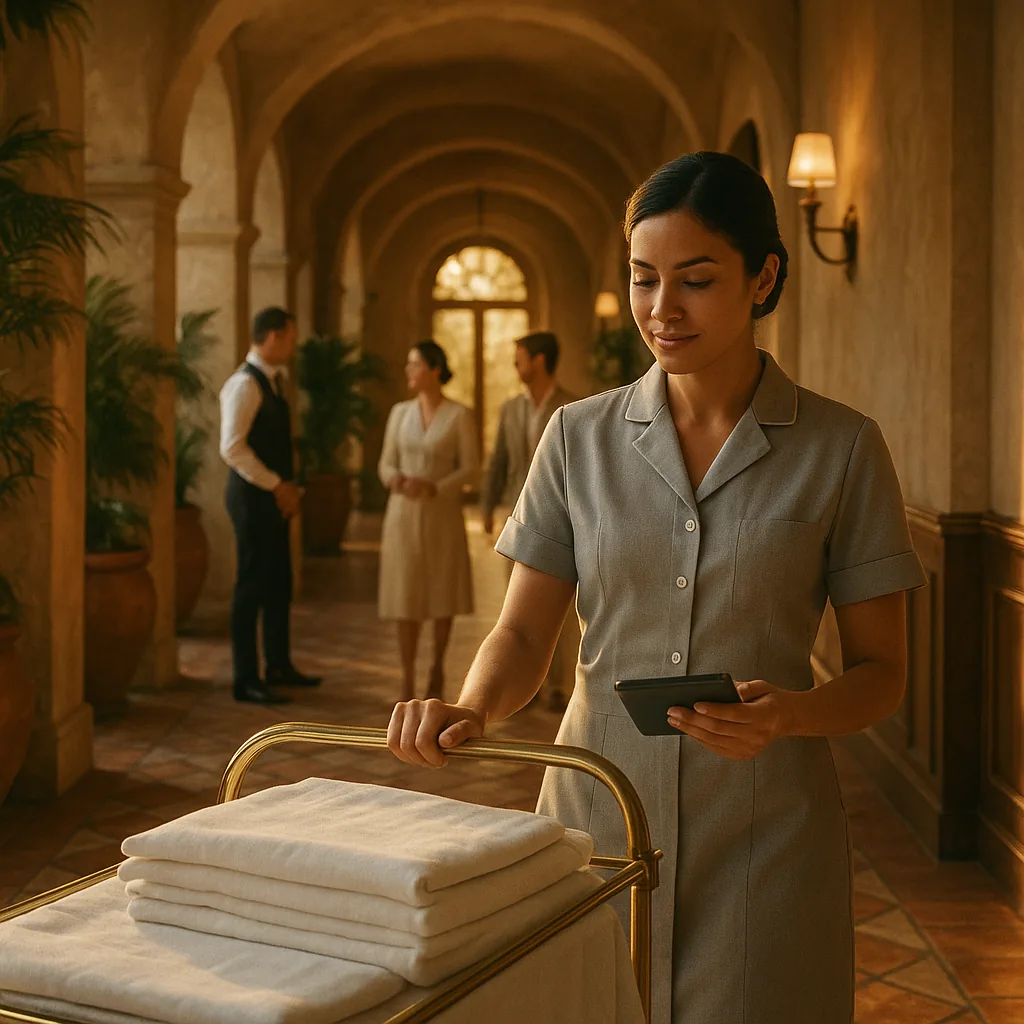
Phone, Clipboard, Whiteboard: What Can Go Wrong
Let us look at typical scenarios in hotels that coordinate housekeeping the traditional way.
Scenario 1: The phone. The receptionist calls housekeeping to ask about room 304. Housekeeping is on the third floor, vacuuming. They do not hear the phone. The receptionist tries again in five minutes. Still no answer. Fifteen minutes later, they finally get through and learn the room has been ready for twenty minutes. The guest waited for nothing.
Scenario 2: The clipboard. The housekeeper gets a printed list of rooms to clean in the morning. They check off each one as they go. Problem: the list is on paper. The front desk cannot see it in real time. The list only reaches reception when the housekeeper finishes the floor. Or when they remember to bring it down.
Scenario 3: The whiteboard. Someone uses a marker to update room statuses on a board behind the front desk. It works, as long as the person responsible remembers to update it. And as long as nobody needs to check room status from anywhere other than the front desk.
Scenario 4: Excel on the computer. A shared file, but it requires access to the computer. Housekeeping is upstairs, not at a desk. They enter statuses at the end of the shift, in bulk. The data is accurate but delayed by hours.
Every one of these methods has the same problem: information about room status reaches the front desk with a delay. And the guest is standing at the counter right now.
The Real Cost of Getting It Wrong
What happens when a guest walks into a room that is not ready?
Compensation and trust recovery. At minimum: an apology and a rush clean. Often it also means a complimentary meal, a room upgrade, a discount on the next stay, or manager time spent recovering the guest relationship. Track these incidents, because the cost is not limited to the cleaning task itself.
A negative review. Cleanliness is one of the most visible parts of a hotel stay, and guests tend to mention it when something goes wrong. A review on Booking.com or Google mentioning a dirty room can keep working against the property long after the incident is resolved.
The check-in domino effect. When a room is not ready at 2:00 PM, the guest waits in the lobby. The next guest arrives at 2:15. Another at 2:30. Suddenly there is a line at the front desk, because one room blocked the entire process. The receptionist is under pressure, makes more mistakes. The day falls apart.
Staff frustration. Housekeeping staff who are constantly bombarded with calls asking "is room X ready?" work under stress. The front desk, lacking reliable information, is frustrated. Both sides blame each other, even though the problem is communication, not people.
Most of these costs are invisible in the budget, because nobody tracks them. But they compound.
How Real-Time Housekeeping Works
The idea is simple: instead of relaying room status information by phone, clipboard, or whiteboard, the housekeeper updates the status directly from their phone.
Here is what it looks like: housekeeping opens an app (or a page in the browser) on their smartphone. They see the list of rooms assigned for cleaning. They enter room 304, start cleaning, and change the status to "Cleaning." The front desk sees the current status in the dashboard. When the room is marked "Clean", reception can verify readiness without calling upstairs.
Fewer phone calls. Less guessing. Less manual relay.
In Guestivo, this system works at the level of individual rooms and entire floors. The front desk sees a real-time dashboard with statuses: red (dirty), yellow (cleaning in progress), green (clean). One glance at the screen and you know which rooms are ready.
An additional benefit: change history. The system records when a room changed status and who changed it. This is useful when you need to verify why a guest reports a dirty room that is marked as clean in the system. Or when you want to check how long it takes to clean specific rooms.
What Changes in Daily Operations
Implementing digital housekeeping changes the work dynamic for three groups of people.
For housekeeping. A clear task list on their phone instead of a sheet of paper that is easy to lose. Autonomy: the housekeeper updates the status and moves on, no need to inform anyone. No more interruptions from front desk calls. Less stress, because nobody is hovering over them with questions.
For the front desk. Reliable information about which rooms are ready. Staff can check guests in from the latest room status in the system, instead of relying on an old whiteboard or a relayed answer. Less calling upstairs and less waiting for someone to answer. Smoother check-in handling even during peak hours.
For managers. Data on how long cleaning takes on each floor. Who cleans faster, who is slower. Whether Mondays need more staff than Wednesdays. The ability to optimize schedules based on data, not hunches. Visibility into what is happening in the property at any given moment.
There is one more effect that rarely gets mentioned: accountability. When every status change is logged, nobody can say "I cleaned that" if they did not. This is not surveillance, it is transparency. And interestingly, from our observations, housekeeping appreciates this more than the front desk, because they finally have proof of their work.
How to Start Without a Revolution
The most common mistake when implementing digital housekeeping is trying to digitize everything at once. Do not do that.
Start with three statuses. Dirty, Cleaning, Clean. That is enough to organize the core handoff between housekeeping and the front desk. Additional statuses (like "Out of Service") can come later, once the team is comfortable with the new tool.
Do not throw away the whiteboard immediately. For the first week, let the whiteboard and the digital system run in parallel. When the team sees that information in the system is faster and more accurate, they will stop using the whiteboard on their own.
Training should be lightweight. This is not an ERP or a reservation system. The first workflow is three buttons on a phone: dirty, cleaning, clean. If the team needs a long training session just to update status, the tool is too complicated.
Management must use the system. This is critical. If the manager still calls for statuses instead of checking the dashboard, housekeeping will lose motivation to update statuses. The system only works when everyone uses it.
Measure the results. After one month, compare: how many times did a guest get a dirty room? How many daily phone calls between the front desk and housekeeping? How quickly are rooms ready after checkout? These numbers will tell you whether the change is working.
Conclusion
The room readiness problem in hotels is not a housekeeping problem. It is a communication problem. The front desk does not know what is ready. Housekeeping has no way to relay that information in real time. The guest gets a dirty room because someone did not answer the phone.
Digital room status tracking closes that gap. It does not need to start with large investments, extensive training, or process overhauls. Three statuses, a smartphone, and a dashboard at the front desk are enough to begin replacing guesswork with current room status.
Sources
- Cornell Hospitality ResearchResearch on the impact of cleanliness on hotel guest satisfaction
Written by
Denis Wasilew
Co-founder
Co-founder of Guestivo. Building scalable solutions that empower hotels to deliver outstanding digital guest experiences.
Published: February 17, 2026