
Hotel Housekeeping Best Practices in 2026 (From 100+ Properties)
Housekeeping is the largest single cost line a hotel manager can actually control — typically 12-22% of operating cost, with another 8-15% in laundry and linen. It's also the function most likely to cause guest complaints (cleanliness consistently rates as the #1 driver of negative reviews). And it's the most automation-resistant function in the building, because robots can't yet clean a hotel room.
This piece focuses on concrete housekeeping practices we see repeatedly in independent hotels and small chains. Concrete practices, not philosophy.
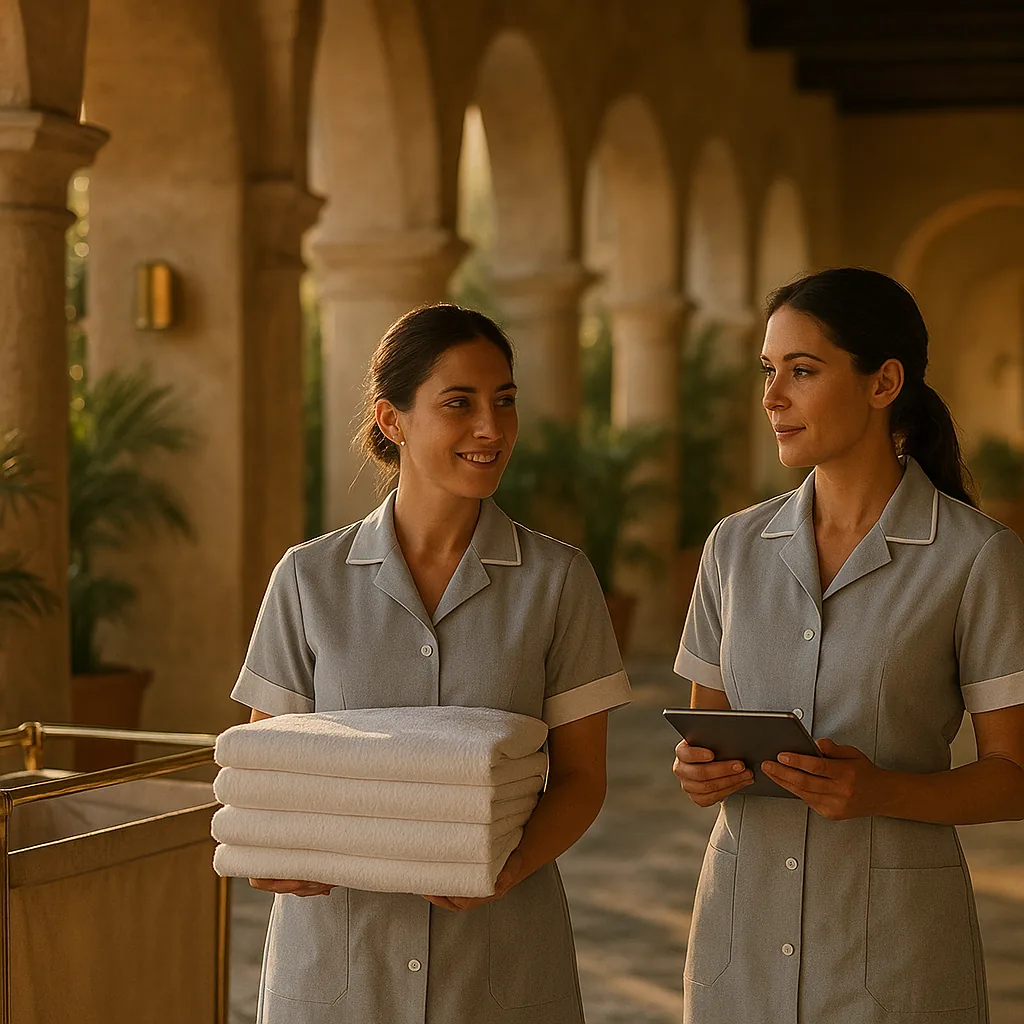
1. Real-time room status tracking is the single biggest unlock
The classic housekeeping workflow — clipboard, walk to reception, update status, walk back — hides handoffs and creates avoidable walking. Real-time status tracking on a phone or tablet makes room readiness visible without a separate reception update.
The other half of the value is on the reception side. When the housekeeping team can flag a room as ready in real time, reception can send the next arrival to the right room without holding the guest at the desk while someone checks status.
For a 50-room hotel, the value should be measured against actual walking time, reception calls, room-ready delays, and rework before and after the rollout.
2. Distinguish departure cleans from stayover cleans with clear standards
Departure cleans and stayover cleans have different standards. Departure usually requires full linen change, deep bathroom clean, mattress check, and minibar restock. Stayover cleaning is lighter and should be defined separately.
The mistake we see: hotels treating every clean as a departure clean. The result: half the rooms get over-cleaned (expensive) while the other half get rushed (quality issues). The fix is a clear visual standard that distinguishes the two — checkboxes on the housekeeping app, colour-coded printouts, training.
Hotels with disciplined departure-vs-stayover separation can measure whether cleaning time per occupied room improves without damaging quality scores.
3. Green programs (opt-out cleans) actually work — when implemented honestly
Offering guests the option to skip daily housekeeping in exchange for a small reward — F&B credit, loyalty points, a charitable donation — sounds like greenwashing. It is not when implemented honestly and measured against actual stayover clean volume.
The discipline: - Make the offer visible at check-in or in the room (digital prompt, in-room card). - Make the reward real (a €5 F&B credit costs you €1.50 in marginal F&B cost vs €15+ in cleaning labour for a full clean). - Allow change (guests should be able to request a clean any day they want). - Track participation to validate the savings.
Green programs can improve guest perception and reduce avoidable cleaning work when the opt-in flow is transparent and the reward is real.
4. Train and retain — turnover destroys housekeeping more than anything
Hospitality housekeeping turnover runs 40-80% annually in many markets. Every departure costs €1,500-€3,500 in recruiting, training, and lost productivity during the ramp.
The retention moves that work: - Predictable schedules published 2+ weeks in advance. Housekeepers with childcare and second jobs can't tolerate week-of schedule changes. - Living wage benchmarked locally. Below local minimum wage equivalents you'll keep turnover above 60%; at +10-15% over local minimum you can cut turnover to 25-35%. - Career path visibility. Floor supervisor, senior housekeeper, head of housekeeping. Even small hotels can offer some progression structure. - Pooled digital tipping. Routes guest gratitude into income, distributed via the housekeeping team's pool rather than table-by-table. Track tip volume and payout fairness against the previous cash-only process. - Recognition systems. Public acknowledgement of cleaning-time targets hit, perfect inspection scores, guest commendations.
The single biggest retention move is the predictable schedule. Most hotels underestimate this.
5. The four housekeeping metrics that actually matter
Hotels track too many housekeeping metrics. The four worth prioritising are:
Housekeeping cost per occupied room. Total housekeeping labour cost divided by rooms cleaned. Benchmark: €4-18 depending on segment. Above €25 in non-luxury is a problem.
Average clean time per room (departure and stayover separately). Should be stable within a 5-minute band. Drifting up suggests schedule problems or training gaps.
Inspection pass rate. Percentage of rooms passing inspection on first check. Target: 90%+. Below 85% is a training or supervisor issue.
Guest complaint rate by category. Cleanliness, towels/amenities, noise. Tracked weekly. Trends matter more than single-point values.
That's it. Don't track everything that's possible to track; track these four religiously.
Conclusion
Housekeeping in 2026 is not glamorous and not automatable. What's changed is the operational tooling around it — real-time status tracking, departure-vs-stayover discipline, honest green programs, retention-focused scheduling, and a tight set of metrics. Hotels should judge the impact on housekeeping cost per occupied room, cleanliness complaints, inspection pass rate, and staff retention rather than assuming a universal savings percentage.
Sources
Written by
Denis Wasilew
Co-founder
Co-founder of Guestivo. Building scalable solutions that empower hotels to deliver outstanding digital guest experiences.
Published: May 16, 2026